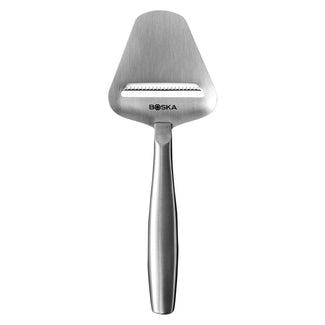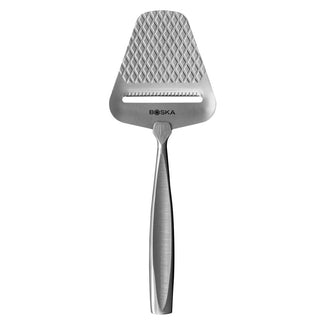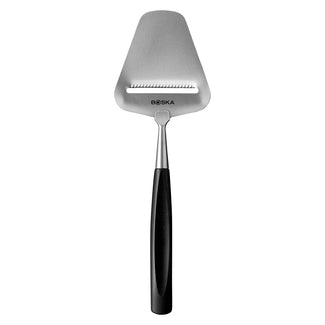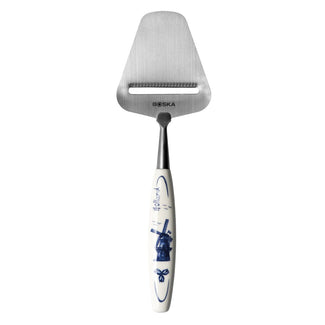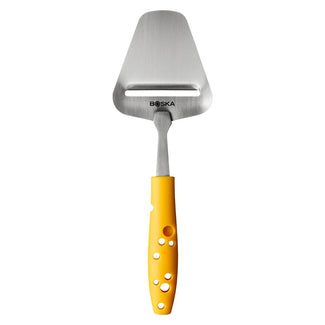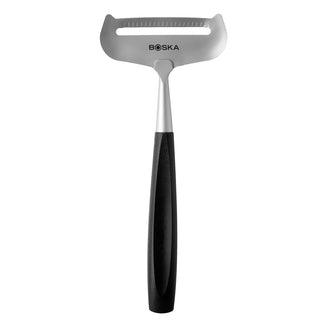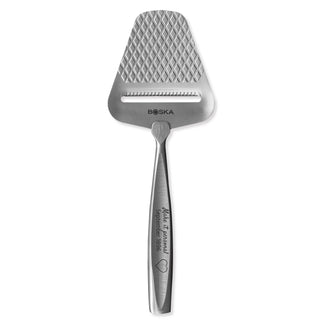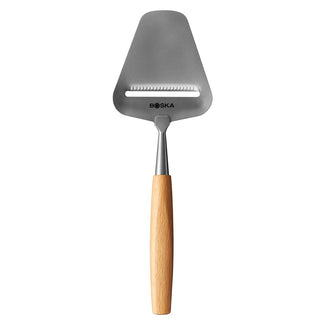

The Perfect Slice: All you need to know about cheese slicers and helpful tips & tricks
Your cart is empty
Which cheese slicer is best for your favorite cheese? Why is there such a taste difference between fresh cheese slices and prepackaged sliced cheese? How do you make the best cheese slices and are there cheese slicers for left-handed people? We answer these and other common questions in the blog below.
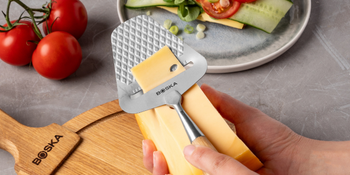
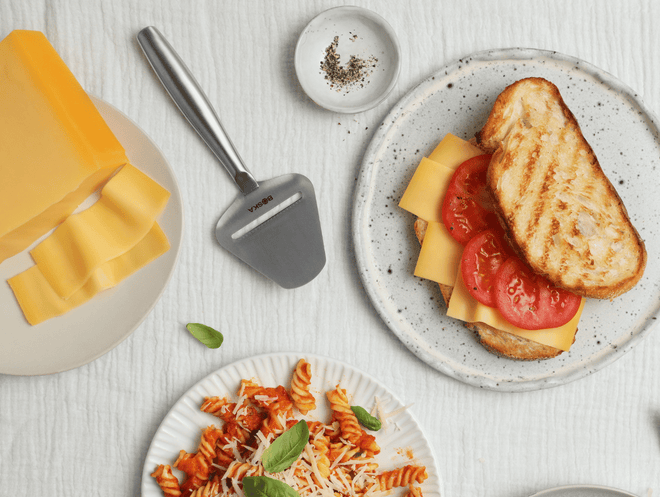
A cheese slicer lets you easily make delicious slices of your favorite cheese. Cheese slices taste great on bread (find some tasty recipes here), in salad or simply as a snack. A cheese slicer is very easy to use: Simply place the cheese block on a flat surface, pull the cheese slicer over the cheese and... voilà! A delicious slice of cheese. Placing the cheese on its side and slicing it is a no-go. Unless, of course, you're a cheese merchant and want to let a customer sample the cheese. 😉
Cheese that is sliced with a cheese slicer has a much richer taste than prepackaged sliced cheese. Pre-sliced cheese is almost always made from rectangular blocks of cheese that are typically not ripened and are of much lower quality. A piece of cheese with a rounded side – from a cheese merchant and often the supermarket – guarantees better quality. And when cheese is sliced, it is exposed to oxygen, which lets it reach its ultimate taste potential.
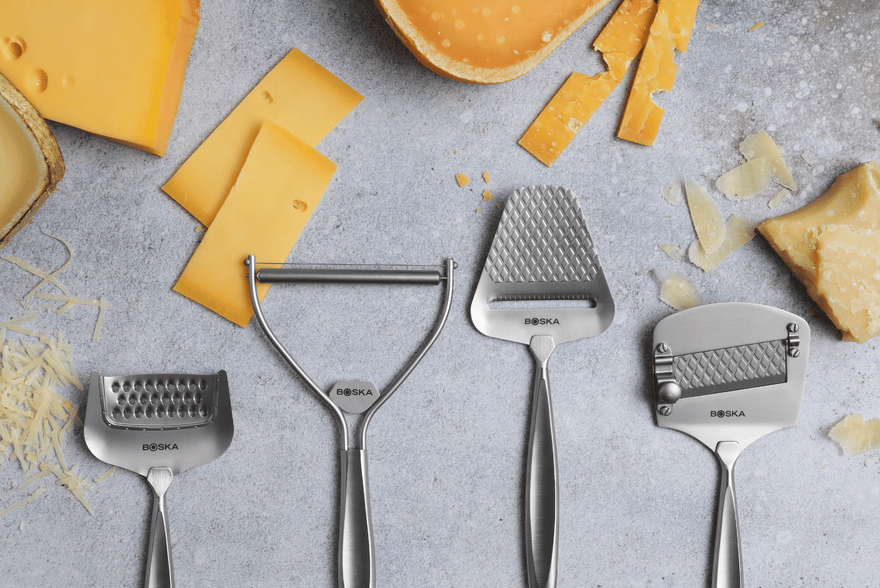
A cheese slicer can be used with most Dutch, Scandinavian, Belgian and German cheeses, primarily the semi-hard and hard varieties. Semi-hard cheeses are Gouda, Emmental, Edam, Havarti and hard goat's cheese, while hard cheeses include Cheddar, Parmesan, Manchego, Comté and Gruyère. Soft cheeses like Brie and Camembert are not suitable for a cheese slicer, but are best cut using a cheese knife or wire cutter.
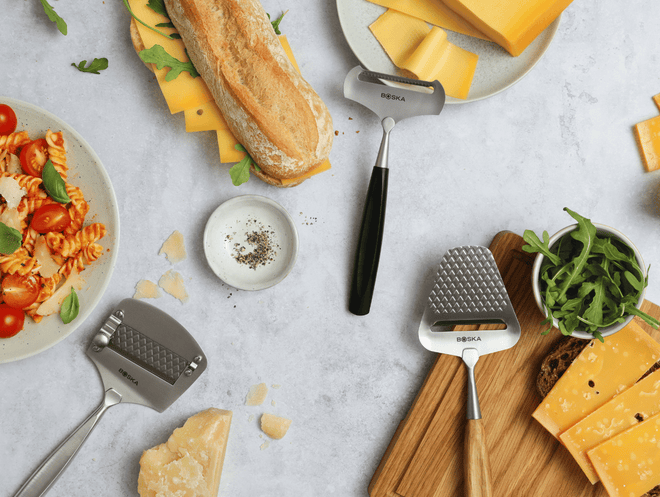
Most Dutch cheeses fall into three categories: mild, mature and aged.

The cheese slicer is a true all-rounder. That's because you can slice lots more with it than only cheese. Want to know what else you can use this superhero for? Then click on the button below to read our other blog about the multi-functionality of the cheese slicer.
Most cheese slicers can be washed in a dishwasher. But if the slicer has a wooden or ceramic handle or you're using a cheese slicer with a cutting wire, it will need to be washed by hand. In fact, the best way to wash all cheese slicers, even those that are dishwasher safe, is by hand. The high temperature, water pressure and aggressive substances in many dishwasher tablets can dull the blade over time or lead to rust stains. BOSKA cheese slicers are designed to last a lifetime, so this is less likely, but prevention is always better than cure.
Yes! All BOSKA cheese slicers can be used by both right and left-handed people. And that can make a difference in a mixed household!
Absolutely! This is because it is not a non-stick coating. BSF™, also known as BOSKA Surface Finish™, is a surface treatment rather than an added material. You can compare it to sanding a board. The board becomes rough instead of smooth. Sanding is also a type of “surface finish.” Cheese slicers with BSF™ have received a surface treatment on the steel, giving it a texture that helps prevent cheese from creating as strong a vacuum as it would without this treatment.
You can do this with cheese slicers that are refrigerator-safe. At BOSKA, many models made entirely from stainless steel or with a plastic handle are suitable for this. Always check the product specifications. It is better not to store cheese slicers with a wooden handle in the refrigerator, as prolonged exposure to moisture and cold can affect the wood.
Storing it in the refrigerator can be convenient if you regularly use the same cheese slicer. At around 4 °C / 39.2 °F, bacteria barely grow and food residue spoils more slowly. This does not mean the cheese slicer will stay clean indefinitely, so regular cleaning is still important.
Share